

In-Depth Analysis of Philips RO Water Purifier’s 6 Core Technologies: What Are Aquaporin, AquaShield, UV-LED, and More?
Water Filtration · Reverse Osmosis · Aquaporin Inside · Philips Technology
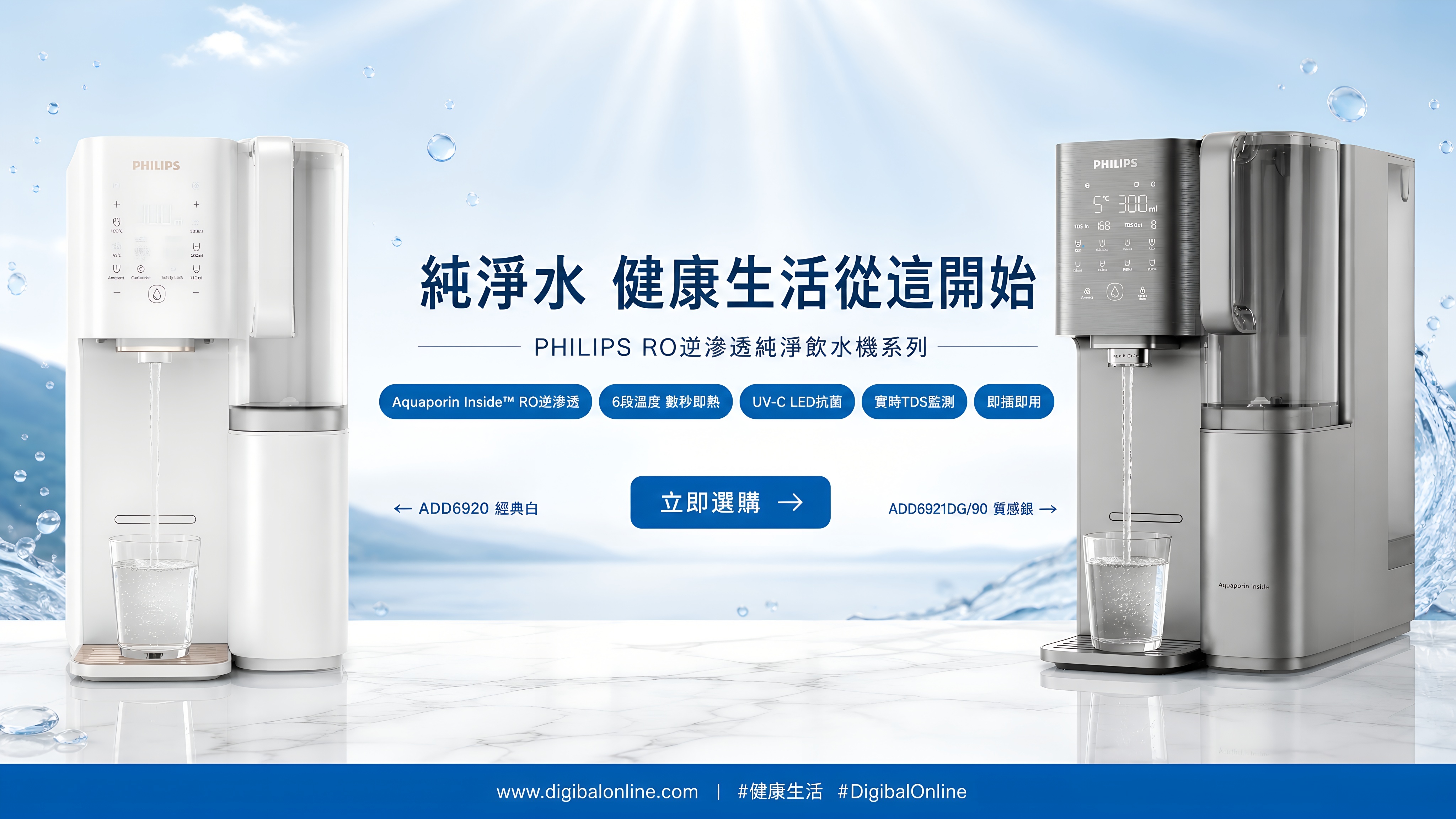
Definition:Philips RO water purifiers combine six technologies into one filtration system—RO reverse osmosis membrane, AquaShield 5-in-1 filter cartridge, Aquaporin Inside® biomimetic membrane, UV-C LED sterilization, instant heating, and mineralization. Each technology targets different contaminants; without any one of them, certain substances may not be effectively removed. Below, we explain the principles, actual effects, and corresponding models of each technology.
📌 Overview of the 6 Core Technologies
- 💧 RO Reverse Osmosis:0.0001-micron membrane pores remove 110 types of harmful substances
- 🛡️ AquaShield 5-in-1:Integrated filter cartridge designed for ADD6910/6911L, with a 12-month lifespan
- 🧬 Aquaporin Inside®:Biomimetic water channel protein technology used by NASA’s space station (ADD6901/6921/6922)
- ☀️ UV-C LED:265–285nm ultraviolet light damages bacterial DNA, achieving a 99.9% sterilization rate
- 🔥 Instant Heating Technology:2,100–2,400W, delivers hot water in approximately 3 seconds, with no hot water tank required
- ⚗️ Mineralization Technology:Strontium mineralization (ADD6920)/alkaline mineralization (ADD6922) improves taste
What Is Reverse Osmosis (RO)?
💧 Philips RO Filtration Process
Water passes through five stages in sequence, with each stage handling a different category of contaminants:
- Pre-filtration:Captures sediment, rust particles, and large particles to protect the membrane downstream.
- Activated Carbon:Adsorbs residual chlorine, odors, and organic compounds. If chlorine is not removed, it can oxidize and degrade the RO membrane.
- RO Membrane:0.0001 microns, blocking heavy metals, bacteria, viruses, and dissolved chemicals. This is the core of the entire system.
- Post-activated Carbon:Fine-tunes the taste and removes any odors that may develop during storage.
- UV-C LED Sterilization:Eliminates residual bacteria in the water storage tank to ensure the water remains clean at the moment it is dispensed.
Models using RO: ADD6901、ADD6902、ADD6910、ADD6911L、ADD6912、ADD6920、ADD6921、ADD6922.
| 1 HK$ = | S$ SGD | A$ AUD | £ GBP | US$ USD |
|---|---|---|---|---|
| Reference Exchange Rates | S$0.16332 | A$0.18128 | £0.09565 | US$0.12748 |
What Is the AquaShield 5-in-1 Filter Cartridge?
🛡️ Three Practical Benefits of AquaShield
- Removes 110 types of harmful substances, including heavy metals, pesticides, and pharmaceutical residues.
- Lifespan of up to 12 months under normal household use.
- All-in-one design — replace once a year, with no need to manage the replacement sequence of multiple filter cartridges.
- Original replacement filter: Philips ADD550 filter cartridge (compatible with ADD6910/ADD6911L/ADD6915).
What is Aquaporin Inside® biomimetic technology?
🧬 Why Aquaporin is special
Aquaporins were discovered by Nobel Prize winner Peter Agre in 2003. They are the most efficient water molecule channels in nature. By embedding these proteins into an RO membrane, a membrane is created that allows only water to pass through.
- Tested by NASA and ESA:Actually used in space station water recycling systems.
- Extremely high selectivity:Only pure water molecules pass through, while salts, bacteria, viruses, and microplastics are blocked.
- More energy-efficient:Requires lower operating pressure than traditional RO membranes, reducing the load on the pump.
- Compatible models:Philips ADD6901、ADD6921、ADD6922。
🧬 NASA-grade technology at home
Aquaporin Inside® models · Free delivery in Hong Kong · 2-year warranty
How does UV-C LED sterilisation work?
☀️ Why UV-C is still needed after RO
The RO membrane can block bacteria, but filtered water is stored in a tank, where the warm, humid environment may still allow bacteria to grow — especially during Hong Kong summers, when kitchen temperatures stay above 28°C for extended periods. UV-C LED irradiation before dispensing damages the DNA of bacteria and viruses, preventing them from reproducing.
Models equipped with UV-C LED: ADD6910、ADD6911L、ADD6922。
How does instant heating technology work?
🔥 Compared with a traditional kettle
Compatible models: ADD6901、ADD6910、ADD6911L(4 presets: room temperature/45°C/85°C/boiling water)。
Strontium mineralisation and alkaline mineralisation technology
⚗️ Strontium mineralisation (ADD6920)
Strontium is a naturally occurring trace element in mineral water and one of the sources of the taste of mountain spring water. Strontium mineralisation adds a small amount of strontium back into the RO water, creating a rounder taste closer to bottled mineral water. This is for taste adjustment, not therapeutic benefits.
💧 Alkaline mineralisation (ADD6922)
Alkaline mineralisation adds calcium, magnesium, and bicarbonate, raising the pH to 7.5–8.5. If you are accustomed to drinking alkaline water or want to reduce astringency when making tea, this feature can be useful; if you prefer the purest water, unaltered RO water is the most neutral choice.
Technology comparison by model
Common Technical Questions
What does an RO membrane pore size of 0.0001 microns mean?
It is approximately one five-hundred-thousandth of the diameter of a human hair—far smaller than bacteria (approximately 0.5–2 microns) and viruses (approximately 0.02–0.3 microns), allowing them to be blocked outside the membrane. Heavy metal ions and dissolved salts are also retained.
How is Aquaporin Inside® different from ordinary RO?
Ordinary RO membranes use pressure to force water through a polymer membrane. Aquaporin membranes incorporate aquaporins, allowing only water molecules to pass through, delivering higher water flow at lower pressure with greater selectivity for salts and contaminants. This technology originated from the water recycling system used on NASA space stations.
Is boiling still necessary after UV-C LED sterilisation?
No. UV-C (265–285nm) damages the DNA of bacteria and viruses, preventing them from reproducing. UV-C LEDs mainly treat bacteria that may grow inside the water tank, serving as the second line of defence after RO.
Does instant heating really provide hot water in three seconds?
Yes. The 2,100–2,400W heating module directly heats the water as it flows through, eliminating the need for a preheating tank. This means no prolonged heat retention and no “repeated boiling”. The first cup usually takes 3–5 seconds, while subsequent continuous dispensing is even faster.
Which is better: strontium mineralisation or alkaline mineralisation?
There is no absolute better or worse option. Strontium mineralisation (ADD6920) gives the water a taste closer to natural mineral water, while alkaline mineralisation (ADD6922) raises the pH to 7.5–8.5. Both are for taste adjustment, not health benefits—if purity is your priority, original RO water is the most neutral option.
Will RO water also filter out beneficial minerals?
Yes. RO removes almost all dissolved substances, including calcium and magnesium. This is how it works and why it is effective. Most of the minerals needed daily come from food, with drinking water contributing only a small proportion. If this is a concern, you can choose a model with a mineralisation function.
When should the filters be replaced? How does the machine know?
Philips estimates filter life based on the cumulative volume of water produced and usage time. The machine or App displays the remaining percentage. In general, the main RO filter lasts 12 months, while the microfilter lasts 6–12 months. Filters should be replaced earlier if the water quality is particularly poor or usage is especially high.
Sources
- Reverse Osmosis — Wikipedia
- Aquaporin — Wikipedia (2003 Nobel Prize in Chemistry)
- Philips ADD6910 — AquaShield Technology Overview
- Aquaporin A/S — Biomimetic Water Treatment Technology
- Philips Hong Kong — Official Water Dispenser Catalogue
Note: Technical specifications are subject to Philips’ official announcements. Filter life is estimated based on normal household usage; actual results depend on water quality and water consumption.