
Hong Kong's Water Supplies Department says treated water meets Hong Kong Drinking Water Standards. It can be drunk unboiled if building management maintains the plumbing, cleans tanks regularly and monitors water quality. If a problem persists, check building and WSD notices first. Boiling does not remove lead, and a low TDS reading does not prove safety.
Basis: Hong Kong WSD: Facts About Water · U.S. CDC: lead in drinking water
- Building plumbing and storage are a separate part of tap-water quality.
- WSD recommends cleaning and disinfecting building storage tanks at least every three months.
- After several hours of stagnation or overnight, WSD recommends running the tap for at least two minutes.
What happens before water reaches your tap?
The public supply is treated and monitored, but internal pipes, tanks and fittings still affect what reaches the tap. Dongjiang water, local catchments and desalination contribute to supply. Neither source nor building age diagnoses an individual tap. Ask management for cleaning records and check with WSD about testing if the problem persists.
What can chlorine smell, cloudiness or yellow water mean?
Appearance and smell are clues, not tests. Residual chlorine helps control microbial growth in distribution. Temporary milkiness can be air bubbles, and yellow water after an interruption can be stirred-up sediment. For a persistent change, contact building management and follow current official notices. Colour and taste cannot rule out lead.
What can boiling, a pitcher or RO actually do?
Choose a treatment for the actual problem. If lead or chemical contamination is suspected, get official advice and appropriate testing. Don't treat boiling, an unspecified filter or a TDS reading as proof the issue is resolved. Manufacturer claims apply to specified models, substances and test conditions.
| Method | What it does | Limit |
|---|---|---|
| Boiling | Follow official directions when addressing microbial risk | does not remove lead |
| Pitcher or carbon | Often used for chlorine taste | lead and other claims depend on the exact cartridge |
| RO | Can reduce specified contaminants and dissolved substances | check testing, feed conditions and maintenance |
When is an RO dispenser worth considering?
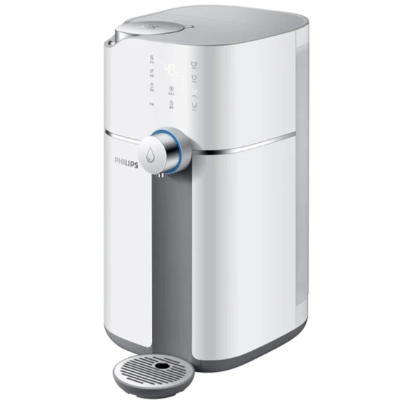
Compare RO if you have identified a specific reduction need, or if temperature and dispensing convenience matter. Pregnancy, age, infancy or a building-age cut-off alone is not a reason to prescribe an appliance. Compare ADD6901, ADD6910, ADD6921 or ADD6922 for convenience, not as medical advice. Use your own bottled-water and filter costs if calculating savings.
Frequently asked questions
Can I use water from the hot tap?
WSD advises against using hot tap water for drinking or cooking.
Does boiling remove lead?
No. Contact WSD about testing if you suspect lead.
Is a low TDS reading proof of safety?
No. It cannot replace contaminant-specific testing.
Can I use cold tap water directly for formula?
Do not apply ordinary drinking-water advice to formula. Follow Hong Kong Department of Health preparation guidance.
Sources and method
Edited from the original article and checked against the sources below. No new hands-on testing was performed. Where variants differ, use the full suffix and its manual. No live store price or stock is stated.
- Hong Kong WSD: water safety
- Hong Kong WSD: Facts About Water
- Hong Kong WSD: water use tips
- GovHK: drinking water supply and monitoring
- U.S. CDC: lead in drinking water
- Hong Kong Family Health Service: safe formula preparation