
Can tenants install an RO water purifier in a rental home? Is a drain connection required? 4 damage-free solutions for Hong Kong tenants in 2026
The short answer:Yes, andno alterations to the fixtures or renovations are required。The option most commonly used by tenants is “No-installation countertop model— Simply place it on the countertop, plug it in, and fill the water tank; take it with you when you move out. No drilling or plumbing connection is required. If you want to connect it to the mains water supply, you can use a “faucet diverter (water splitter valve)” connected to the faucet or angle valve, and the setup can still be fully restored. What you must not do is drill a hole in the countertop or modify the water pipes inside the wall.
What are the differences between the three options? (From safest to most involved)
The conclusion is clear:A and B already meet the needs of 90% of tenants, D should only be considered for owner-occupied properties or with the landlord’s written consent.
| 1 HK$ = | S$ SGD | A$ AUD | £ GBP | US$ USD |
|---|---|---|---|---|
| Reference Exchange Rate | S$0.16332 | A$0.18128 | £0.09565 | US$0.12748 |
Why Are Tenants Most Afraid of “Water Leakage”?
Plumbing modifications involve two risks: first, liability for water leaks (tenancy agreements typically require tenants to cover damage caused by negligence); second, disputes when moving out (the landlord may require the premises to be restored to its original condition). Diverter valves and tee connectors are bothadd-on componentsthat do not alter the original structure, leave no trace after removal, and carry the lowest risk.
Practical tip: Before installation, place a towel or small basin underneath the connector, and check the connection for leaks within 24 hours of first use.Most water leakage incidents are caused by insufficient tightening, not product defects.
🏠 How Much Do Installation-Free Models Cost? (Verified on 2026-10-28)
The table below only lists models that can be used without modifying the unit or connecting to a water supply. Prices are automatically generated by the SHOPLINE product API. Verification date: 2026-10-28.
Tank-Type or Plumbed-In: Which Should Renters Choose?
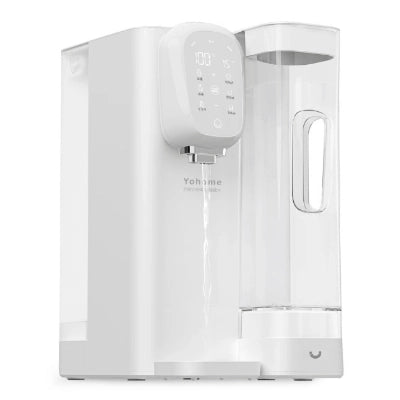
Answer:If you drink less than 5 litres of water a day, choose a tank-type model—— No plumbing, no need to turn off the water supply, and most convenient when moving house;If your household has 3 or more people or uses more than 8 litres of water a day, choose a plumbed-in model—— No need to refill the tank every day, but one-time installation is required.
The practical limitation of a tank-type model is its capacity: the common range is 3–5 litres, which means you need to refill it 1–2 times a day. Many people only realise how inconvenient this is after buying one, so it is worth considering carefully before making a purchase.
Which tenancy agreement clauses should you pay attention to?
The three most relevant are:① The “Alterations and Additions” clause(whether written consent is required)、② The “Reinstatement” clause(your responsibility to restore the property when the tenancy ends)、③ The “Repair Responsibilities” clause(who is responsible for damage caused by water leaks)。
If your tenancy agreement states that “written consent from the landlord is required for installing any equipment”, the simplest approach is touse Option A(no installation or plumbing required), or obtain written consent via WhatsApp first and keep a record.
How should you take it with you when moving house?
Three steps:① Turn off the water supply, remove the diverter, and reinstall the original faucet aerator;② Drain any remaining water from the water purifier(most models have a drain outlet; if not, let it run until the tank is empty);③ Remove the filter cartridges and place them in sealed bags to prevent water leaks and contamination during transport.
After reinstalling the machine, it is recommended to run water through it for 2–3 minutes before drinking, especially if the machine has not been used for a long time.
What other common questions are there?
Can it really not be installed if the landlord does not approve?
Option A(countertop type, with no plumbing connection)generally does not constitute an “alteration”, but it is still advisable to notify the landlord in advance to avoid disputes when the tenancy ends.
Will the diverter affect the water flow from the original faucet?
It will reduce the flow rate slightly because the water has to pass through the diverter. Most people will not notice, but if you are using a low-water-pressure faucet, it is recommended to measure the water pressure first.
Do I need to hire a technician to remove it when the tenancy ends?
No. The diverter and three-way connector can both be removed and installed with a wrench, and the process can generally be completed within 10 minutes.
The water purifier is quite heavy. Can the countertop support it?
Most countertop water purifiers weigh between 10–20 kilograms when filled with water. If you are placing one on a thin shelf or movable countertop, it is recommended to check the load-bearing capacity first.
Sources and Methodology
Tenancy agreement clauses: Common residential tenancy agreement templates in Hong Kong(not relating to any specific case). Installation method: Compiled based on actual installation experience with models sold by our store. Limitations: Faucet models vary significantly between estates, so diverter compatibility must be confirmed on a case-by-case basis; this articledoes not constitute legal advice。
Related article:Comparison of 9 Philips RO Water Purifiers、Filter Replacement and Maintenance、RO Water Purifier Electricity Costs and Wastewater Ratio