


Which lens to buy in 2026: Sony E, Fujifilm X and Canon RF compared
Lens Buying Guide · Sony E · Fujifilm X · Canon RF · Singapore / UK / Australia 2026
The short answer: buy a standard zoom first (28-70 or 24-70 F2.8), a prime second (35mm or 85mm), a 28-200 if you travel with one lens, and a 35-150 F2-2.8 if you want portraits covered by a single lens. Twenty-three lenses below, priced in four currencies.
Quick picks
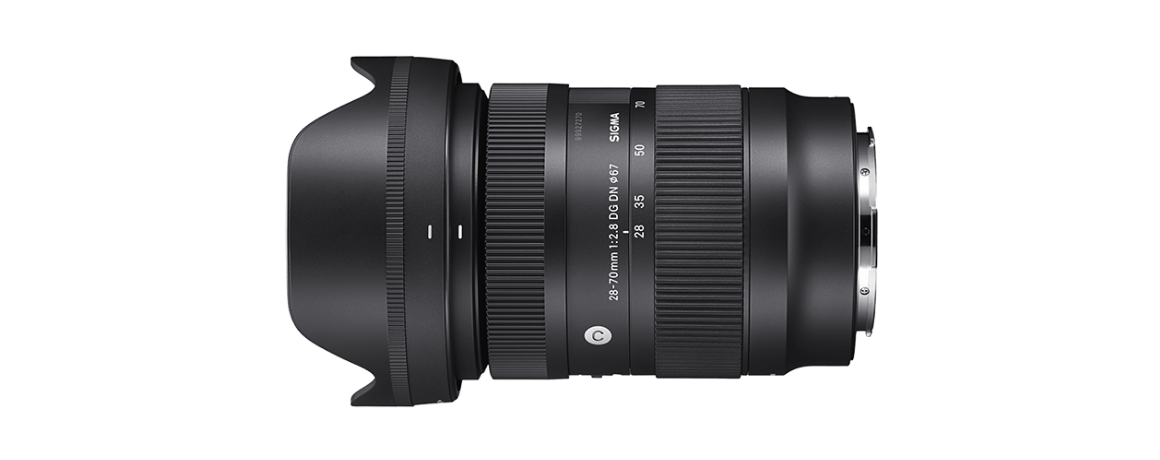
- Best value standard zoom: Sigma 28-70mm F2.8 DG DN
- Standard zoom for paid work: Sigma 24-70mm F2.8 DG DN
- Travel, one lens: Tamron 28-200mm
- Portraits in one lens: Tamron 35-150mm F2-2.8
- Best value fast prime: Sigma 56mm F1.4 DC DN
- Astro: Sigma 14mm F1.4 DG DN Art
Three things to settle first
1. Your mount
Sony E, Fujifilm X, Canon RF and Nikon Z lenses do not cross over. Confirm the mount before anything else - it is the most basic step and the most commonly skipped.
2. Equivalent focal length
On APS-C, multiply by 1.5. A Fuji 23mm is a 35mm equivalent, a 35mm is a 52mm, and a 56mm is an 84mm. Full-frame bodies use the marked focal length directly.
3. What you actually shoot
Landscape wants wide (14-24mm), documentary wants 35mm, portraits want 85-135mm, sport wants 200mm and up. Settle the use, then the focal length, then compare models.
Sony E mount (full-frame and APS-C)
Fujifilm X mount (APS-C)
Fuji's strength is primes: aperture rings and controls that match the body. Sigma's DC DN line gives Fuji shooters a genuinely cheap fast prime.
Canon RF mount
Third-party choice is thin on RF. First-party glass is excellent and expensive. The telephoto we currently stock is the RF100-400mm.
By use
Portraits
On a budget: Sigma 56mm F1.4 - an 84mm equivalent for very little. For professional separation: Sigma 85mm F1.4 DG DN Art. If you do not want to change lenses: Tamron 35-150mm F2-2.8 covers full body to headshot in one barrel.
Travel
One lens only: Tamron 28-200mm, which covers wide to telephoto but is slow at night. For quality: Sigma 28-70mm F2.8.
Landscape
Ultra-wide: Tamron 17-50mm F4. Astro: Sigma 14mm F1.4 - a fast ultra-wide is the whole game for the Milky Way. Compression: Tamron 150-500mm.
Sport and wildlife
Tamron 70-180mm F2.8 G2 or Sigma 100-400mm. For more reach, add the 2x teleconverter, but confirm compatibility first.
Buying from Hong Kong: what to expect
Lenses ship from Hong Kong. Singapore 5-9 working days, UK 6-10, Australia 7-12. Warranty is a Hong Kong shop warranty: we service locally, you cover return freight, and the round trip is 2-4 weeks. Lens failure rates are low, which is why most overseas buyers take the parallel-import price rather than the local distributor price.
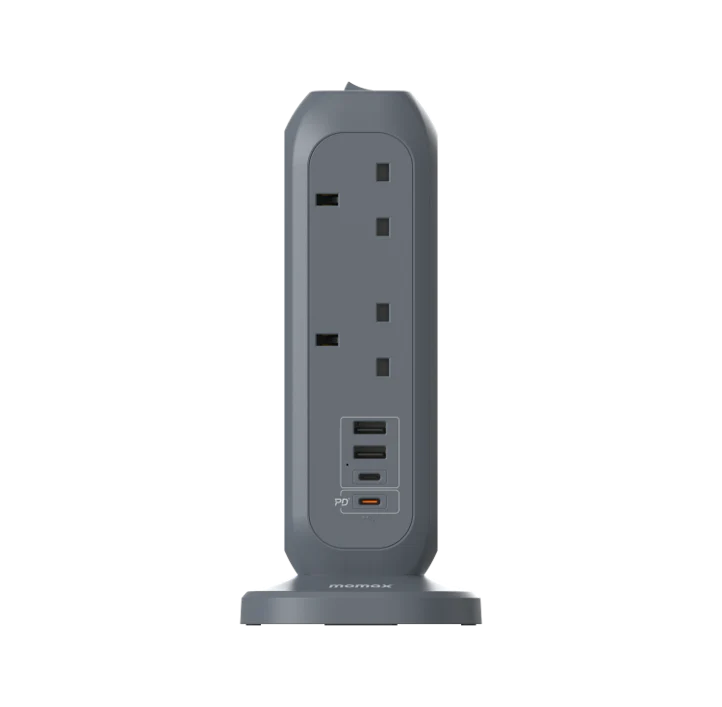
None of these need a voltage adapter - they are passive optics. If you are also buying a body or a charger, read our travel adapter guide: Singapore and the UK use the same Type G plug as Hong Kong, and Australia only needs a Type I adapter.
Questions we get asked
Can I use a full-frame lens on an APS-C body?
Yes. Sony FE lenses mount on APS-C bodies with a 1.5x crop (a 28mm behaves like 42mm). The reverse also works: an APS-C-only lens such as a Sigma DC DN on a full-frame body drops into crop mode and takes a resolution hit.
How far behind are third-party lenses now?
Optically, very close - several Sigma and Tamron designs match or beat first-party sharpness. The differences are autofocus speed, stabilisation co-operation, in-camera correction profiles and weather sealing. For paid work, first-party is the safer bet; for everything else, third-party is clearly better value.
What is "equivalent focal length"?
APS-C sensors are smaller, so the angle of view matches a 1.5x longer lens on full-frame. A Fuji 23mm looks like a 35mm, and a 56mm like an 85mm. Do this conversion before you buy or you will buy the wrong focal length.
Is a constant F2.8 zoom worth the money?
Yes if you shoot indoors or at dusk regularly. An F2.8 zoom is still F2.8 at the long end, which is one to two stops over an F3.5-5.6 kit lens - often the difference between getting the shot and not.
Prime or zoom first?
Buy a zoom first, a prime second. The zoom solves "can I get it in frame", the prime solves "does it look good". The shallow depth and low-light ability of an F1.4 prime is something no zoom can give you.
Do teleconverters work on every lens?
No. They fit specific first-party telephotos, they reduce the aperture (a 2x turns F2.8 into F5.6) and they slow autofocus. Check the compatibility list before buying.
Is there a warranty on parallel-import lenses?
Yes, our shop warranty. Lens failure rates are far lower than body failure rates, so the price advantage of parallel import is usually worth taking.
What should I check when buying a lens?
Focus should be smooth and quiet, the aperture blades free of oil, the glass free of fungus and scratches, and the zoom ring even in resistance. The shop will let you check all four.
Before you buy
- Mount confirmed (Sony E / Fuji X / Canon RF / Nikon Z)
- Equivalent focal length worked out for your sensor
- Filter thread checked, and filter cost counted in
- First-party versus third-party compared on price and weight
- Teleconverter compatibility confirmed, if relevant
- Warranty type understood: distributor or shop warranty
Focal length, aperture and mount are taken from the product name. Hong Kong prices are read live from our product pages; SGD, GBP and AUD are converted at the rate published on 28 October 2026 and exclude shipping, duties and taxes. APS-C equivalents use a 1.5x factor.