
Security cameras for Singapore, the UK and Australia: what to buy, and what to ignore
Security Camera Guide · Battery · PoE · Doorbell · SG / UK / AU 2026
In 30 seconds: for a rented flat, one battery camera on the door is enough and needs no wiring. For a shop or a house, wired PoE recording is the only thing that reliably holds up as evidence. For a gate you cannot reach easily, solve power first - solar or mains - before you solve resolution. Twenty-seven cameras below, all in stock, priced in four currencies.
Quick picks
- Cheapest usable outdoor camera: Reolink Argus 3E
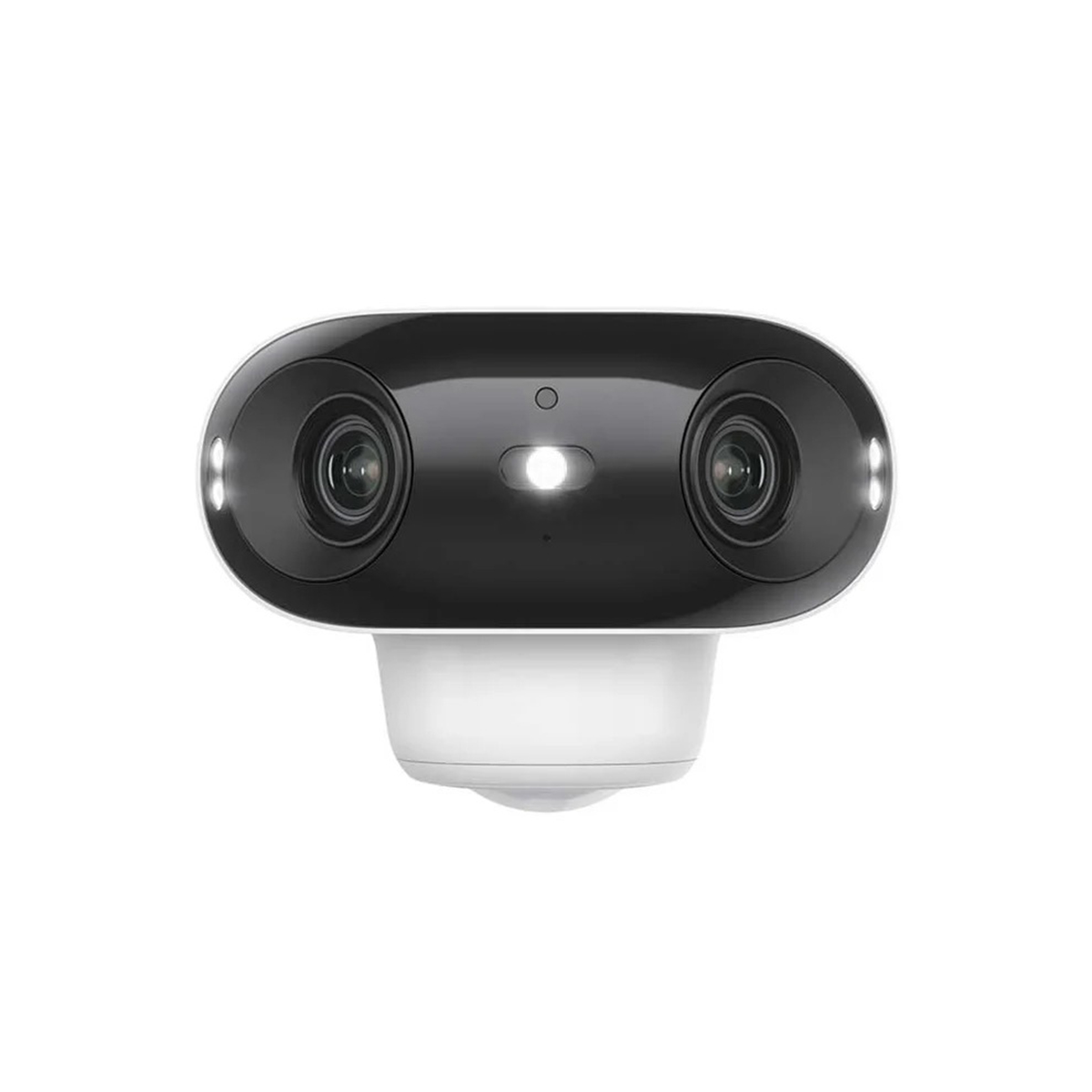
- Best all-round battery camera: Reolink Argus 4 Pro (180° dual lens, IP66)
- No Wi-Fi at all: Reolink Go Plus 4G
- Wired system for a shop: Reolink NVS8 8-channel PoE NVR
- Video doorbell: EZVIZ DP2 2K
- Indoor, cheapest: EZVIZ H6C 1080p
The decision is power, not megapixels
Three questions settle almost every purchase.
1. Is there power at the mounting point? If yes, buy a mains or PoE camera and never think about charging again. If no, you are choosing between a battery camera and a solar panel, and you need to be honest about whether the panel gets sun.
2. Is there Wi-Fi, and does it reach? 2.4GHz travels further through walls than 5GHz; a camera two rooms away on 5GHz will drop out. If there is no broadband at all, the 4G models are the only option.
3. Do you need the footage to hold up later? For insurance or a police report, continuous recording to an NVR beats motion clips on a card. A battery camera that missed the moment because it was recharging is no evidence at all.
The range, in four currencies
Hong Kong prices are read live from our product pages. Singapore, UK and Australian figures are converted at today's rate and rounded - a guide to relative cost, not a quote.
Battery cameras: be realistic about charging
A battery camera in a quiet driveway can last months. The same camera pointed at a footpath wakes up constantly and will need charging in weeks. No manufacturer figure survives a busy scene. If the camera is above a first-floor window or on a high wall, either buy solar or accept that you will be getting a ladder out.
Solar: seasonal, and only as good as the panel angle
In Singapore a solar panel keeps up year-round with a few hours of decent sun. In the UK it is genuinely seasonal - a south-facing panel in summer is fine, and in December it will not keep up, so plan to top the battery up manually. In Australia, shade the camera body even if the panel is in sun: UV and sustained heat do more damage to housings and batteries than rain does.
Mains and PoE: the option people skip
A PoE camera runs on one ethernet cable that carries both power and data, records continuously to an NVR, and never needs charging. If you are fitting out a shop, this is the correct answer and it costs less over five years than replacing battery cameras. The trade-off is that you need to run cable, which means doing it before the ceiling goes up or the shelves go in.
What about the rules?
If you are filming a public footpath or a neighbouring property, the rules differ by market and they are not optional. Singapore has PDPA notice and retention requirements for shop CCTV; UK guidance centres on proportionality and signage; in Australia the requirements vary by state. We cover the Singapore position in detail in our PDPA and shop CCTV guide.
Questions we get asked
Do these cameras need a subscription?
No. Every camera here records to a microSD card and streams live view without a cloud plan. A subscription only adds cloud backup.
Which one if I have no Wi-Fi?
The Reolink Go Plus 4G takes a SIM card and runs on 4G LTE, so it works where there is no home broadband. Everything else here needs 2.4GHz Wi-Fi.
Battery or mains power?
Battery cameras mount anywhere and need recharging every few weeks to months depending on how busy the scene is. Mains or PoE cameras record continuously and never need charging, but they need a cable run. If you have a socket at the mounting point, use it.
How much storage do I need?
A 3MP or 5MP camera fills 64-128GB in a few weeks of event clips. The 4K models take up to 512GB, which is what you want if you need to keep footage after an incident without downloading it immediately.
Will the camera survive the weather?
Look for an IP rating. Where the manufacturer publishes one: IP66 on the Reolink Argus 4 Pro, IP67 on the Reolink MagiCam and Solar. Many models do not publish a rating at all - mount them under an eave rather than fully exposed.
Singapore, UK or Australia - what changes?
Only the plug. All of these charge by USB or run from a USB power supply, and SG/UK/Australia are all 230V. Singapore and the UK use the same Type G plug as Hong Kong; Australia needs a Type I adapter, not a transformer.
How long does delivery take?
Hong Kong 1-2 working days, Singapore 5-9, UK 6-10, Australia 7-12. Warranty is a Hong Kong warranty: we service locally, you cover return freight (about HK$150-350 each way) and the round trip is 2-4 weeks.
Can I mix Reolink and EZVIZ?
You can run both, but they are separate apps and separate storage. Pick one ecosystem per site unless you specifically want them separate.
Before you order
- Power at the mounting point: yes / no / solar possible
- 2.4GHz signal actually tested at that spot, not assumed
- Storage decided: card capacity, or NVR channel count
- IP rating checked if the position is exposed
- Legal notice requirements checked for your market
- Plug type: SG/UK Type G (same as Hong Kong), AU Type I adapter only
Specifications are taken from manufacturer product pages and our product titles; where a manufacturer does not publish a figure we have not invented one. Hong Kong prices are read live from our product pages; SGD, GBP and AUD are converted at the rate published on 28 October 2026 and exclude shipping, duties and taxes. Warranty is a Hong Kong warranty as described above.